Garage cleanout, kitchen remodel, roof tear-off, or whole-house renovation — here's how to match your Taunton-area project to the right dumpster size, and why dense material fills a container by weight long before it looks full.
9 min readUpdated 2026-05-08By Silver Hammer Dumpster Rental
Ask five different neighbors what size dumpster you need for a garage cleanout and you'll probably get five different answers. That's because most people size a container the same way they'd size a moving truck: by picturing how much "stuff" needs to disappear. For lightweight junk, that mental math works fine. For the kind of dense, heavy material that comes out of most Taunton-area home projects — shingles, drywall, tile, plaster, old lath, concrete, wet lumber — it doesn't, and it's the single biggest reason homeowners end up either paying overage fees on a container that looked half-empty or ordering a second haul for one that filled up faster than expected.
At Silver Hammer Dumpster Rental, we size hundreds of containers a year for projects across Taunton, Raynham, Berkley, Dighton, Norton, Easton, Mansfield, and the rest of Bristol and Plymouth County. The pattern is consistent enough that we can map it to real, common projects. Below is the reasoning we use on the phone every day, plus a straightforward comparison table you can use to size your own job before you call.
Why Weight Beats Volume for Dense Debris
Every roll-off dumpster has two limits, not one: a volume limit (measured in cubic yards, which is where the "10-yard," "20-yard," and "30-yard" names come from) and a weight limit (measured in tons, built into the rental price and enforced at the scale when the truck weighs the load). For light, bulky material — cardboard, furniture, old carpet padding, general household junk — you'll almost always hit the volume limit first. The container looks full before it's anywhere near its weight allowance.
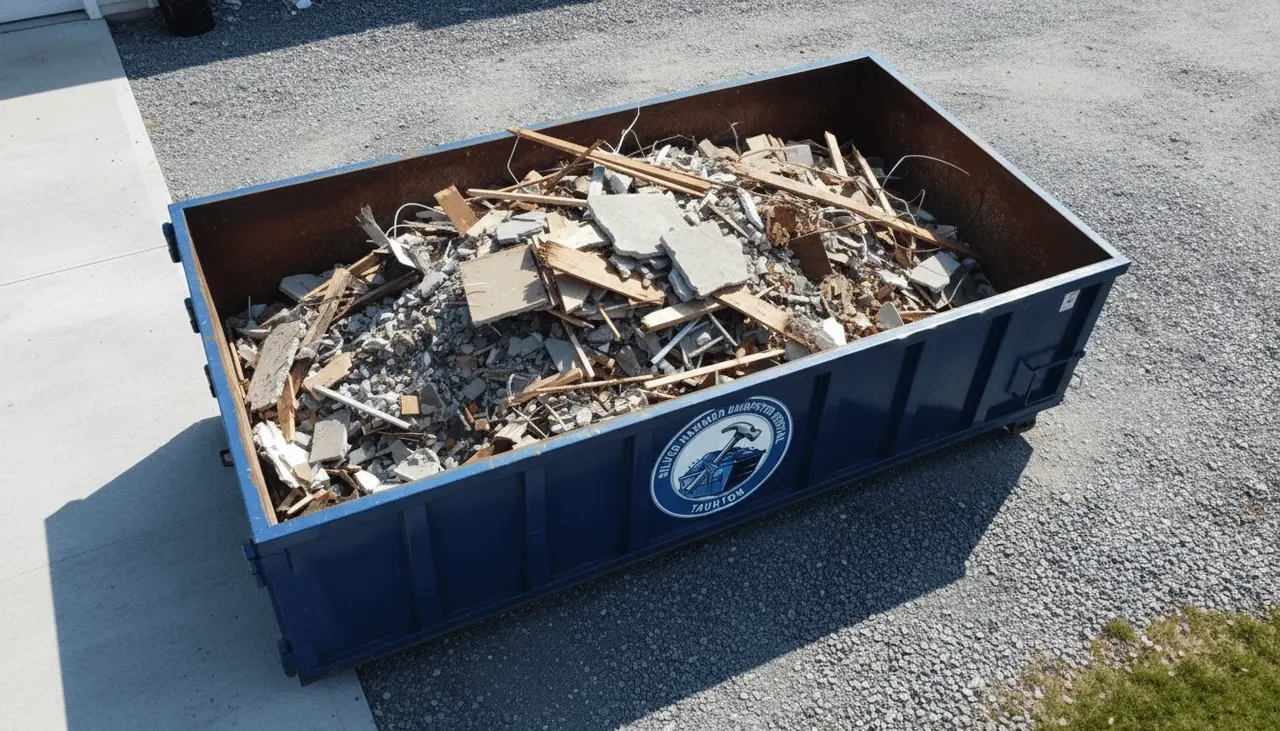
Dense material flips that relationship. A single layer of asphalt shingles weighs roughly 200–300 pounds per 100 square feet, and most Taunton-area roofs have two or three layers to remove. Concrete, brick, plaster, and wet demolition debris are even heavier by volume. Load enough of that into a container and you'll hit the weight limit while the dumpster still looks like it has room left — visually maybe half full, but already at or past its tonnage allowance. That's the core idea worth remembering for every project below: weight fills a container before volume does, whenever the material is dense. Picking a size means asking not just "how much space will this take up" but "how heavy is what's actually going in it."
Dumpster Sizes at a Glance
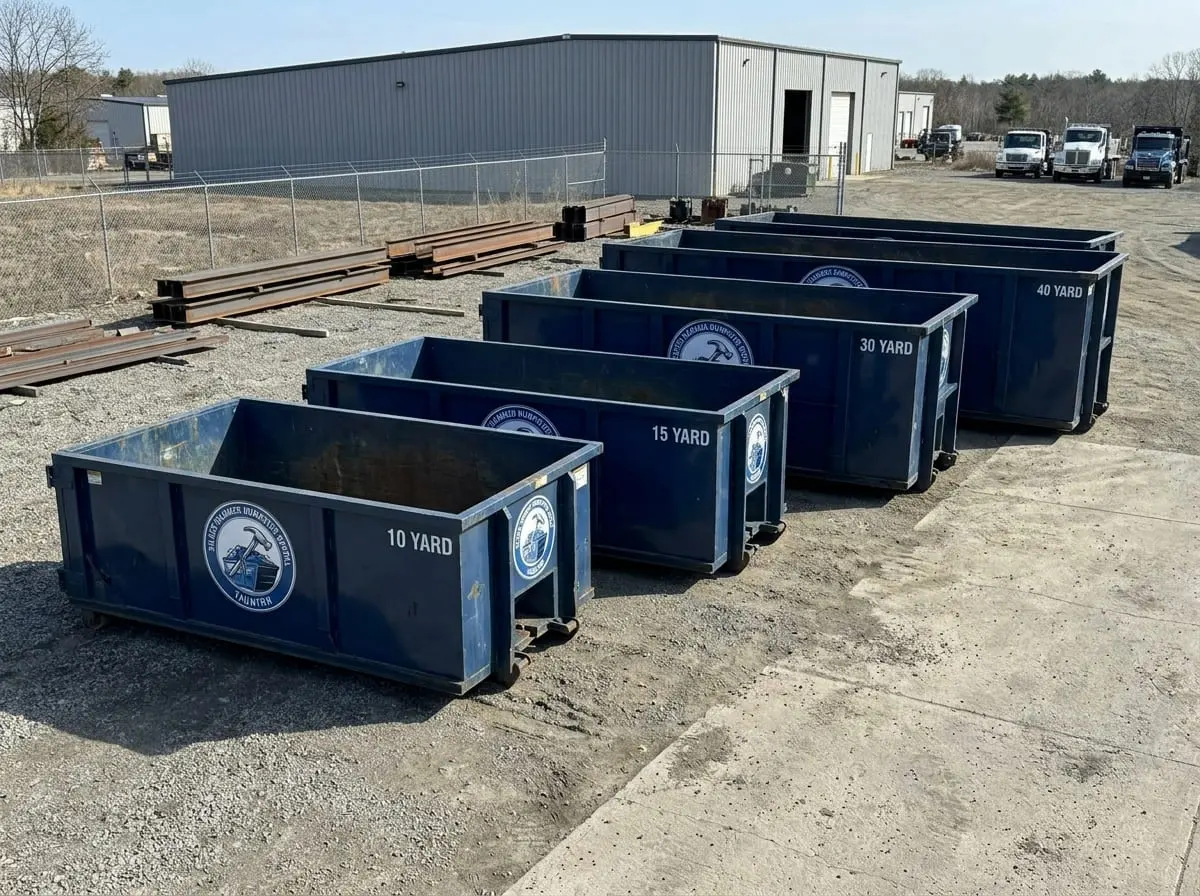
Here's how the five sizes we carry generally line up with typical residential and light-commercial projects in the Taunton area. Weight allowances vary by load type and are confirmed when you book — use these as planning figures, not a guarantee, and call us if you're not sure which column your project falls into.
Size
Roughly Holds
Best For
Watch Out For
10 Yard
3–4 pickup truck loads
Garage cleanouts, single-room cleanouts, small deck demo, minor junk removal
Fills on weight fast if loaded with concrete, tile, or roofing scrap
15 Yard
5–6 pickup truck loads
Kitchen or bathroom remodel, medium deck removal, garage plus attic cleanout
A tight fit for mixed remodel debris with cabinets and old flooring together
20 Yard
7–8 pickup truck loads
Larger kitchen remodels, single-layer roof tear-offs, estate cleanouts of a full house
Multi-layer shingle tear-offs can hit weight limit before the bin looks full
30 Yard
9–12 pickup truck loads
Whole-house renovations, additions, large roof tear-offs, bigger estate clearances
Needs clear driveway space — measure before booking
40 Yard
12–16 pickup truck loads
Full home renovations, new construction, major commercial cleanouts
Largest footprint; best for light-to-medium debris rather than pure concrete or dirt
This is the most common call we get, and it's usually the easiest to size. A garage cleanout in a typical Taunton triple-decker or a ranch out in Raynham or Berkley is mostly lightweight-to-medium material: old furniture, boxes, sports equipment, paint cans (check local disposal rules for liquids first), scrap wood, and general clutter. Unless you're also pulling out an old concrete workbench slab or a stack of roofing tar paper, a 10-yard container almost always has plenty of volume and weight capacity to spare. It's also the easiest size to fit in a standard driveway without blocking the street. See our residential dumpster rental page for how booking works for a project this size.
Small Deck Demo — 10 to 15 Yard
Deck demolition debris is deceptively heavy for its size. Pressure-treated lumber, especially if it's been rained on (not unusual with our nor'easter season), holds water weight, and the fasteners, footings, and old ledger board add up. A small deck (roughly 10x12 to 12x16) typically fits a 10-yard container if the wood is dry and there's no concrete footing removal involved. Add wet lumber, a larger footprint, or concrete piers coming out of the ground, and we usually recommend stepping up to a 15-yard to stay under the weight allowance rather than risk an overage charge on a container that still had visible room.
Kitchen Remodel — 15 to 20 Yard
Kitchen remodels mix lightweight material (cabinet boxes, drywall scraps) with genuinely heavy material (tile, countertop remnants, old appliances if they're not being recycled separately). A gut-down-to-the-studs kitchen in an older Taunton mill-district home or a Silver City-area triple-decker — where original plaster and lath are common under later drywall layers — runs heavier than a newer-construction kitchen in Easton or Mansfield. For a standard kitchen-only remodel, 15 yards usually covers it. If you're also replacing flooring throughout the adjoining rooms or the countertops are stone, 20 yards gives you a buffer. Our construction dumpster rental service is built around exactly this kind of mixed-material remodel debris.
Full Roof Tear-Off — 20 to 30 Yard
Roofing is the clearest example of the weight-versus-volume principle in action. A single layer of asphalt shingles off an average-size Taunton-area roof (around 2,000–2,500 square feet) can weigh two to three tons on its own. Many homes in this region have two or even three layers of shingles from past re-roofs that were installed over the old layer instead of tearing it off first. That second and third layer doesn't add much visible volume — shingles compact down flat — but it adds a lot of tonnage. A single-layer tear-off on an average roof usually fits a 20-yard container comfortably. A multi-layer tear-off, a steep or complex roofline, or a larger home should generally move up to a 30-yard, specifically for the weight allowance rather than the space. We cover this in more detail on our roofing dumpster rental page, and it's worth a call before you book if you're not sure how many layers are up there.
Whole-House Renovation — 30 to 40 Yard
Full renovations — especially the kind common in older Taunton-area housing stock where a project might include stripping plaster and lath, replacing old plumbing and knob-and-tube wiring runs, tearing out flooring throughout, and updating insulation — generate a high volume of mixed-density debris over the life of the project. For homes built before 1978, that older material can also include lead paint on trim and plaster, which changes how debris should be handled and disposed of; we're happy to talk through that when you call. For a true whole-house gut renovation or a sizable addition, 30 yards is the common starting point, and larger homes, additions with new construction waste, or projects generating debris over several weeks often move to 40 yards. If your project is more selective — a couple of rooms, not the whole house — you may not need to go this large; that's worth a quick phone conversation so you're not paying for capacity you won't use.
Estate Clearance — 20 to 30 Yard
Clearing out a family home, particularly an older one in the Taunton area that's been lived in for decades, is more about volume than weight in most cases — furniture, decades of belongings, old appliances, and household goods rather than construction debris. But older homes often surface unexpectedly heavy material too: box-spring mattresses (note that Massachusetts has banned mattresses and box springs from regular trash disposal since November 2022, so these need separate handling), old file cabinets, books by the box, or a workshop's worth of tools and hardware. A full-house estate clearance in a typical single-family home usually lands in the 20-yard range; larger homes, or ones with a garage, basement, and attic all being cleared at once, often call for 30 yards. Our estate cleanout service is set up specifically for this kind of project, including guidance on what needs to be handled outside the dumpster (mattresses, electronics, and certain other banned items among them).
When In Doubt, Size Up — A Little
If your project falls between two sizes on the table above, the safer call is usually the larger one, but only by one step. Going two sizes larger "just in case" usually isn't worth the extra rental cost, and an oversized container for a light job doesn't solve a weight problem anyway — if the material is dense, a bigger box just means more empty-looking space above a load that's already at its weight limit. The better move for a genuinely heavy, dense job (concrete removal, full masonry demolition, a large dirt or gravel cleanup) is often a container specifically suited to heavy debris rather than simply the largest box available. If that's your project, take a look at demolition debris removal or concrete and heavy debris — these are priced and sized around dense-material loads specifically, which is usually a better value than an oversized general container.
Local Factors That Affect Your Choice
A few things specific to Taunton and the surrounding towns are worth factoring in alongside the material itself:
Older housing stock. Taunton's mill-district lofts, triple-deckers, and pre-1978 homes throughout Raynham, Dighton, Berkley, and the rest of Bristol County often mean plaster, lath, and old lead-painted trim instead of modern drywall. That material is heavier and needs to be handled correctly — a factor in sizing and in disposal, not just volume.
Street versus driveway placement. Most Taunton-area towns don't require a permit for a dumpster placed entirely on your own driveway, but placing one on a public street or the town right-of-way generally does require a permit from the local DPW. Check with your town before booking if street placement is your only option, and measure your driveway clearance either way — a 30 or 40-yard container has a real footprint.
Weather. Wet material weighs more. If you're demoing a deck, tearing off a roof, or clearing storm debris after a nor'easter, budget extra weight allowance for waterlogged wood, soaked shingles, or saturated yard waste.
Digging into the ground. If your project involves removing a concrete pad, a deck footing, or anything below grade, call Dig Safe System (digsafe.com) before you dig, regardless of dumpster size — it's the law in Massachusetts and it's free.
How to Get It Right the First Time
The fastest way to size a dumpster correctly is still a two-minute phone call. Tell us what's coming out (material type, approximate age of the home, roughly how many rooms or how much square footage), and we'll match it against the pattern we see across hundreds of Taunton-area jobs every year. If your project is time-sensitive, our same-day dumpster rental option can often get a correctly-sized container to you the same day you call. Browse the full lineup on our services page, check general questions on our FAQ page, or just reach out directly and we'll help you land on the right size the first time — no guessing, no second haul.
Silver Hammer Dumpster Rental
Written by the team that runs the trucks out of our yard on 37 Cushman St in Taunton. We haul
roll-offs across Bristol County, Plymouth County and the wider Taunton area every week. Questions about your own job?
Call (774) 504-5393.
Talk to a real person
Ready to book a container in Taunton?
Call and describe the job. Flat price, stated tonnage, and a delivery time on the same call.
How do I know if I need a 20-yard or a 30-yard dumpster?
It usually comes down to how heavy the debris is, not just how much space your project seems to take up. A single-layer roof tear-off, a large kitchen remodel, or a full estate cleanout typically fits a 20-yard container. A multi-layer roof tear-off, a whole-house renovation, or a larger home with a bigger volume of mixed debris usually calls for 30 yards so you don't hit the weight limit before the container looks full. If you're between the two, describe your project when you call and we'll help you land on the right one.
What happens if I go over the weight limit on my dumpster?
Every rental includes a set weight allowance, and the load is weighed at the scale when the truck picks it up. Going over that allowance typically results in an overage charge based on the extra tonnage. This is exactly why dense material matters so much when choosing a size — a container that looks half full of shingles, concrete, or tile can already be at or near its weight limit. If you're not sure how heavy your project's debris will run, call us before booking so we can size it correctly up front.
Can heavy material like concrete, brick, or roofing shingles go in any size dumpster?
Technically dense material can go in any of our containers, but it's rarely the most cost-effective choice for a general-purpose dumpster because you'll hit the weight limit long before the volume limit. For projects that are mostly concrete, brick, asphalt, or similar heavy debris, our concrete and heavy debris service is typically sized and priced specifically for that kind of load, which usually works out better than renting an oversized general container.
Do I need a permit to place a dumpster in my driveway in the Taunton area?
In most Taunton-area towns, a dumpster placed entirely on your own driveway does not require a permit. Placing a container on a public street or the town right-of-way generally does require a street-occupancy permit from the local Department of Public Works. Requirements vary by town, so check with your local DPW if street placement is your only option, and let us know when you book so we can help plan around it.
What's the best dumpster size for a whole-house renovation versus a single-room remodel?
A single-room remodel, like one kitchen or one bathroom, generally fits a 15 to 20-yard container depending on how much tile, cabinetry, and flooring is coming out. A whole-house renovation generates a much higher volume of mixed debris over a longer timeline and typically starts at 30 yards, moving up to 40 yards for larger homes, additions, or projects that include new-construction waste. Older Taunton-area homes with plaster, lath, or pre-1978 materials also tend to run heavier, which can push the size up a step.
Picking a dumpster size shouldn't be a guessing game. Here's the actual math behind volume and weight, how much driveway space each size needs, and what to tell Silver Hammer on the phone so you order the right container the first time.
Dumpster rental pricing isn't a mystery once you know what's inside a flat rate. Here's the real cost structure behind Taunton-area rentals, what pushes a price up, and the questions that keep it from happening to you.
Since November 1, 2022, mattresses, box springs and textiles can't legally go in the trash or a mixed-debris dumpster anywhere in Massachusetts. Here's what changed, why, and how Taunton-area residents and landlords actually handle it during a cleanout, move-out or renovation.