Picking a dumpster size shouldn't be a guessing game. Here's the actual math behind volume and weight, how much driveway space each size needs, and what to tell Silver Hammer on the phone so you order the right container the first time.
10 min readUpdated 2026-02-02By Silver Hammer Dumpster Rental
The question we hear most on the phone at Silver Hammer Dumpster Rental isn't "how much does it cost" — it's "which size do I actually need." That's the right question. Order too small and you're paying for a second haul or an overage fee. Order too big and you're paying to park empty space in your driveway. Getting it right the first time comes down to two numbers — volume and weight — plus a quick gut-check on where the container is going to sit. This guide walks through both, town by town reality included, so you can call us with real numbers instead of a shrug.
If you'd rather skip the math and just talk it through, that's genuinely fine — call (774) 504-5393 and we'll size it with you in about two minutes. But if you like to know the "why" before you commit to a driveway full of steel for a week, read on.
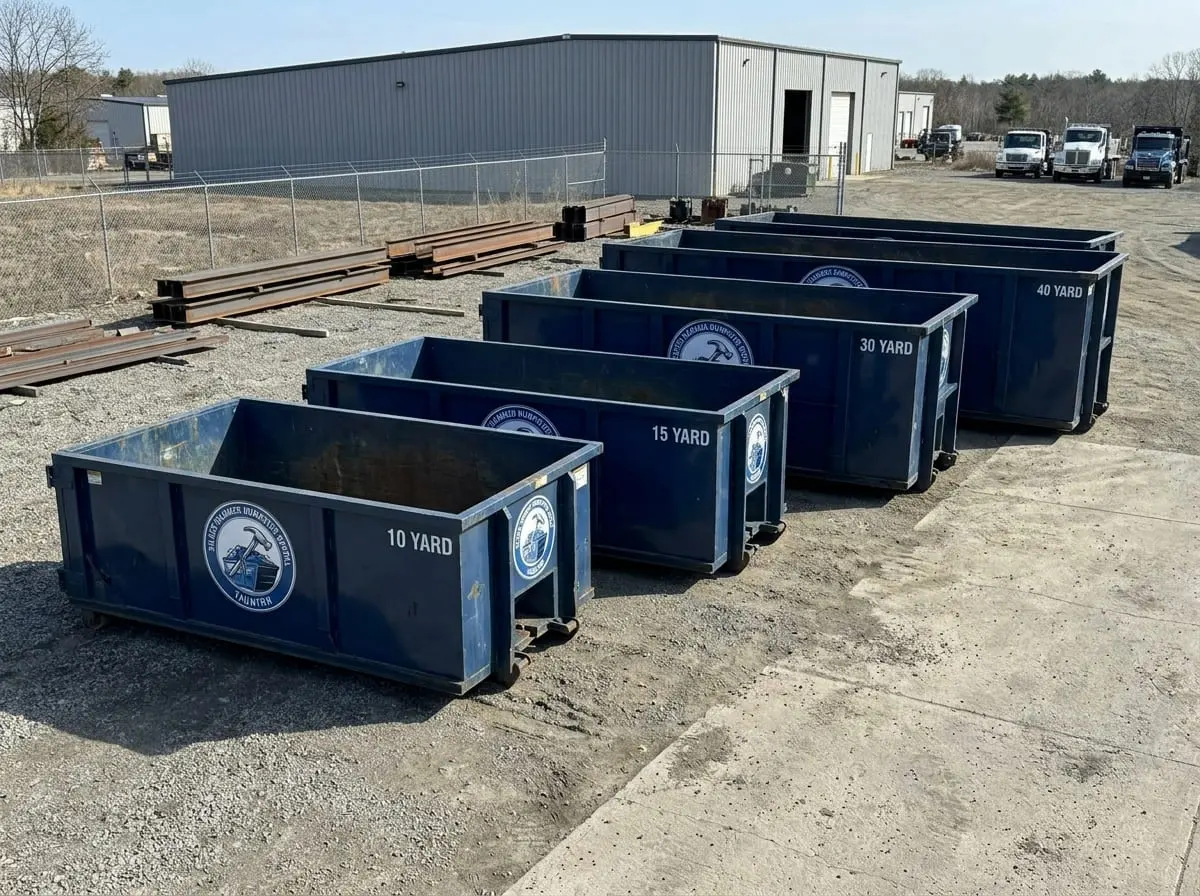
Every dumpster size is measured in cubic yards — length × width × height, in yards, not the "yard" as in your lawn. One cubic yard is a cube roughly 3 feet on each side, about enough to fill the bed of a standard pickup truck a little more than a third full. A "10-yard" dumpster holds 10 of those cubes. That's the whole system. Once that clicks, the rest of this guide is just arithmetic.
Two Numbers Matter: Volume and Weight
Most people size a dumpster by volume alone — "will it fit" — and that's usually the right instinct for household junk, furniture, and general cleanout debris, because that kind of material is bulky but light. It fills up a container's space long before it comes close to the weight limit.
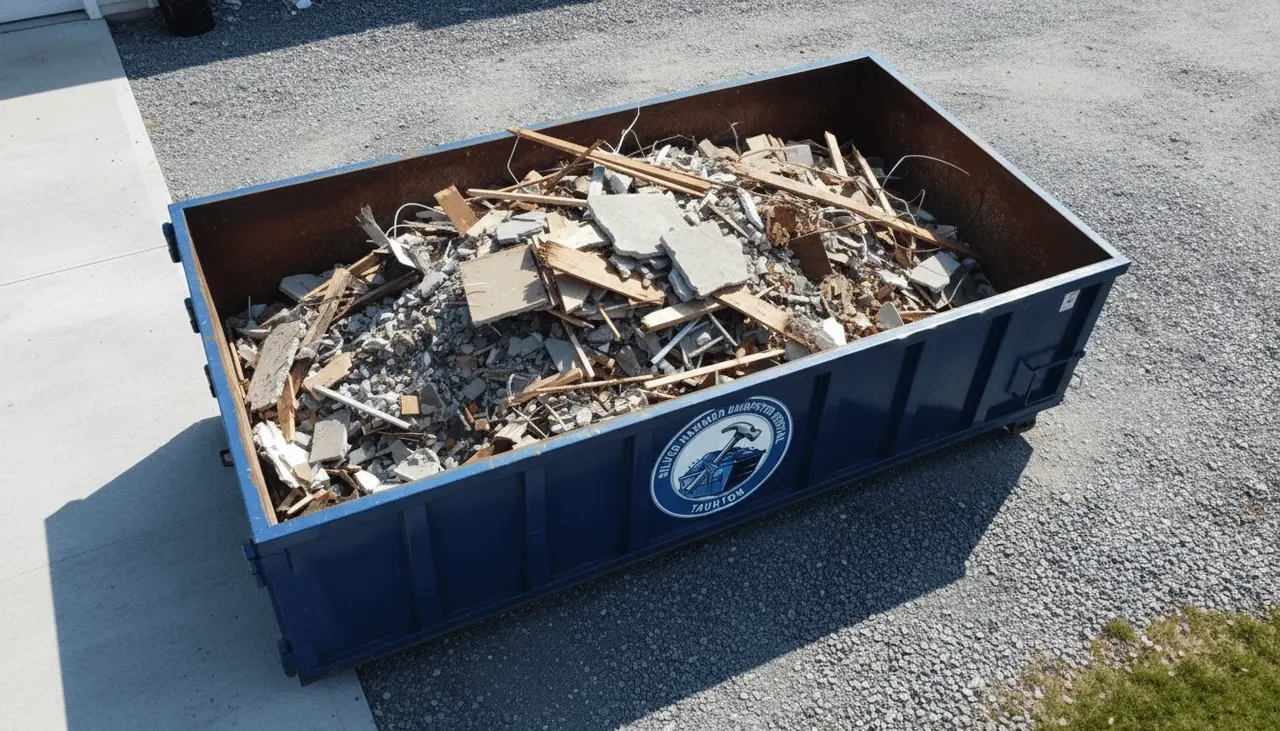
Dense debris flips that logic. Concrete, brick, dirt, tile, roofing shingles, and wet drywall are heavy in a small footprint — a 20-yard dumpster half-full of old asphalt shingles can hit its weight allowance before it's visually even a third full. Every rental from us includes a set weight allowance based on the size and the material you tell us you're loading; go over it and you'll see an overage charge on the back end, which is the single most common surprise in this business. If your project is roofing, concrete, or full-depth demolition, size around the weight, not the volume — see our roofing debris and concrete and heavy debris pages for material-specific guidance, or just tell us the material on the phone and we'll pick the right size and allowance together.
Doing the Volume Math Yourself
You don't need to be precise to the cubic foot — you need to be roughly right. Here's a fast way to estimate:
Room-by-room cleanouts: a fully furnished single room (bedroom, home office) is roughly 1–2 cubic yards once broken down. A garage or basement packed floor to ceiling can run 10–15 cubic yards on its own.
Pickup truck loads: a level, full-bed pickup load is about 2–3 cubic yards. If you're picturing "how many truck runs would this take me," multiply that number by 2.5 and you're in the right neighborhood.
Square footage for flooring/demo: tear-out debris (flooring, subfloor, drywall) from a single room runs roughly 1 cubic yard per 250–300 square feet of floor area, more if you're pulling multiple layers.
Roofing squares: one roofing "square" (100 sq ft) of asphalt shingles, tear-off, runs about 3 cubic yards by volume — but as noted above, weight usually caps you first on a roof job.
Add 15–20% headroom to whatever you calculate. Debris never stacks as cleanly as it sits in your head, and a container that's genuinely full to the rim (not mounded over the top rail) is the only way we can safely and legally haul it — Massachusetts road rules don't allow loads stacked above the container walls.
New construction, commercial buildouts, major demolition and site clearing
Actual dimensions flex a few inches depending on the individual container in our yard, so treat these as planning numbers, not blueprints. Want the deep dive on any one size — typical projects, weight allowances, and what fits? Our dumpster sizes hub links out to a full page for each.
How Much Driveway or Yard Space You'll Actually Need
Volume gets a container that fits your debris. Placement space gets a container that fits your property — and this trips up more Taunton-area customers than the size math does, especially on the older, narrower lots around downtown and the triple-decker streets near the Silver City's old mill districts.
Footprint: plan on roughly 4 extra feet of width beyond the dumpster's own footprint and 6–10 extra feet of length in front of it for the delivery truck to lower and later lift the container. A 20-yard box needs more like a 22–24 ft clear lane, not just its own 20 ft body.
Overhead clearance: our trucks need about 22–23 feet of vertical clearance to tilt the container off the truck bed. Low tree limbs, power lines, and carport roofs are the most common surprises — walk your delivery spot and look up, not just around.
Approach: the truck backs in, so it needs a relatively straight shot — a long, tight, curving driveway may rule out truck access entirely, which is a conversation worth having before delivery day, not during it.
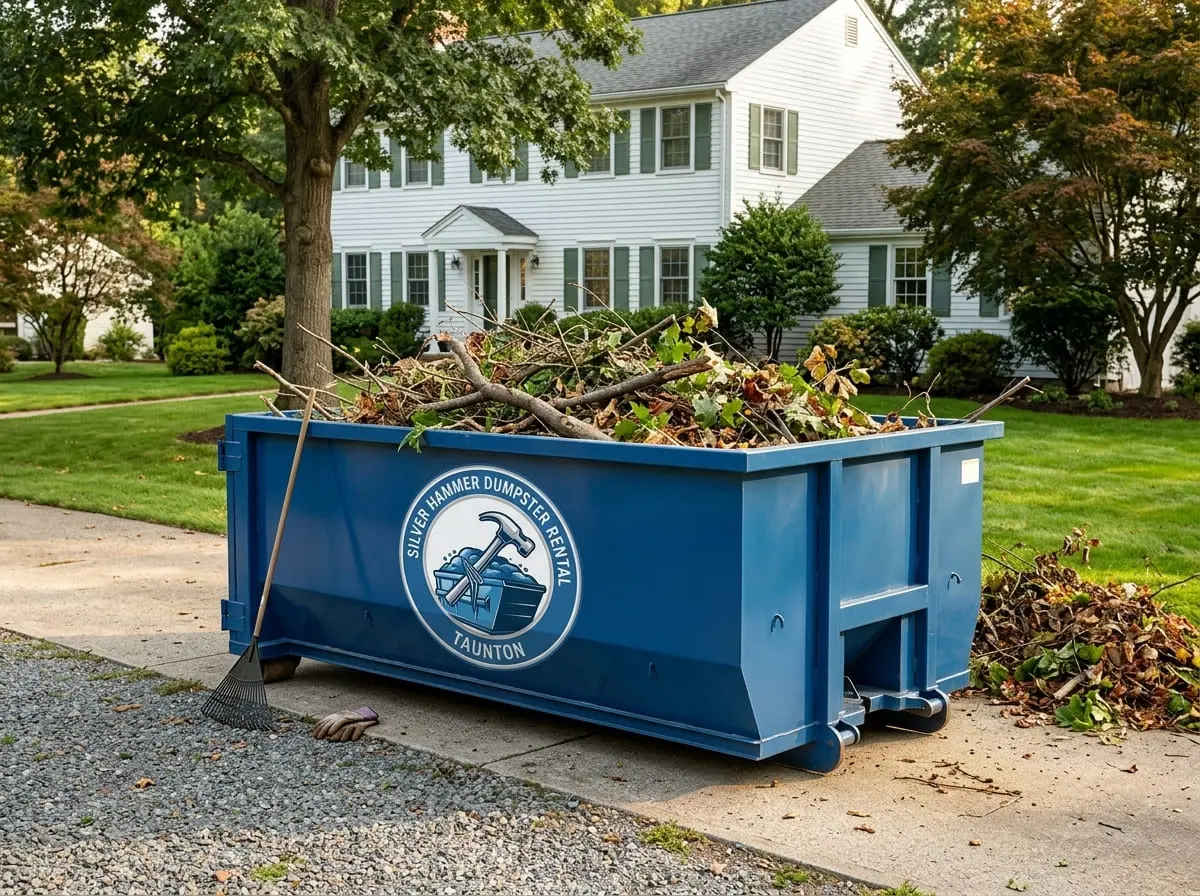
Ground surface: asphalt and concrete driveways handle a loaded dumpster fine. Grass, gravel, or soft ground can rut or sink under the weight, especially after a wet Massachusetts spring or a fall nor'easter — ask us about placing wood planks under the rails if the surface isn't solid pavement.
Street placement: if the driveway genuinely won't work, placing the container on the street is usually possible, but most Taunton-area towns require a street-occupancy or obstruction permit from the town DPW first, and reflective markers or cones after dark. Check with your town before delivery day if that's the plan — we can tell you what we typically see for a given town's requirements, but the permit itself comes from the municipality.
Not sure your driveway will work? Tell us the surface, the approach, and any overhead obstacles when you call, and we'll flag it before the truck ever leaves our Taunton yard.
How to Talk to Silver Hammer on the Phone to Get Sized Right
A two-minute call beats guessing every time, because we're doing this sizing conversation daily and can catch the things a size chart can't. Here's what to have ready when you call (774) 504-5393:
What's actually going in it. "Cleaning out a garage" and "tearing off a roof" size completely differently even at the same volume, because of the weight difference discussed above. Be specific — mixed household junk, yard waste, roofing, concrete, drywall, furniture, or a mix.
A rough scope. Number of rooms, square footage, or "it's a one-car garage packed to the rafters" is plenty. We're not expecting a blueprint.
Where it's going to sit. Driveway, street, or yard — and whether that surface is paved, gravel, or grass.
How long you'll need it. Standard rental periods run about 7–10 days; if your project is going to run longer, say so up front so we can quote the right rental window instead of surprising you with a per-day extension later.
Timing. If it's urgent, ask about same-day availability — it depends on our schedule that day, but Taunton is close enough to home base that same-day is often workable if you call before early afternoon.
We'll ask a couple of follow-up questions — usually about material mix and access — and then recommend a size and a weight allowance that matches the job, not just the biggest box we have sitting in the yard. If you're between two sizes, we'll generally tell you which way to round based on what we see go wrong most often (see below).
Common Sizing Mistakes We See
Sizing for volume and forgetting weight. A perfectly-sized-by-volume container full of wet shingles or concrete can still hit its weight allowance early. If your project involves anything dense, lead with the material type when you call, not just the room count.
Rounding down to save money. A slightly smaller dumpster looks cheaper on paper, but a second pickup, a second delivery, or an overage fee for stacking above the rail almost always costs more than renting one size up would have. When you're genuinely between two sizes, the larger one is usually the better bet.
Not accounting for demo debris, not just what you can see. "I'm just replacing the flooring" often turns into subfloor, old adhesive, baseboards, and trim once the project actually starts. Budget extra volume for anything involving demolition, even a "small" one.
Ignoring delivery access. The right size dumpster that can't actually reach your driveway isn't the right size. Walk the delivery path and check overhead clearance before you commit to a spot.
Mixing banned materials in with everything else. Massachusetts' statewide waste bans keep certain items — mattresses and box springs, textiles, tires, and more — out of roll-off dumpsters entirely, regardless of size. Loading them anyway doesn't just risk a fee, it can hold up the whole haul. When in doubt about an item, ask us before it goes in.
Guessing instead of calling. This one's simple: the fastest way to avoid the other four mistakes is a two-minute call before you order.
When Two Sizes Both Seem Close
If your estimate lands right on the line between two sizes — say, 18 cubic yards of debris, sitting between a 15 and a 20 — go up. The cost difference between adjacent sizes is almost always smaller than the cost of a second delivery, an overage charge, or a truck that shows up and can't legally take a mounded load. The one exception is weight-limited jobs: if you're hauling something dense like concrete or full roof tear-off, a bigger box doesn't necessarily buy you more capacity if the weight allowance caps you first — that's exactly the case where the phone call matters more than the size chart.
Whether you're clearing out a triple-decker near downtown, tackling a renovation project, or handling storm cleanup after a Southeastern Massachusetts nor'easter, the goal is the same: one container, sized once, hauled once. Browse our full services lineup for project-specific guidance, check our service area to confirm we cover your town, or just call us directly and we'll get you sized right the first time.
Written by the team that runs the trucks out of our yard on 37 Cushman St in Taunton. We haul
roll-offs across Bristol County, Plymouth County and the wider Taunton area every week. Questions about your own job?
Call (774) 504-5393.
Talk to a real person
Ready to book a container in Taunton?
Call and describe the job. Flat price, stated tonnage, and a delivery time on the same call.
What's the most common dumpster size for a Taunton homeowner project?
For general home cleanouts, garage clear-outs, and small remodels around Taunton, the 15-yard and 20-yard dumpsters are the most frequently rented sizes. They're large enough for a multi-room project or an average roof tear-off, but still fit comfortably in a standard residential driveway. If you're not sure which of the two fits your job, call (774) 504-5393 and describe the project — we'll recommend one.
How do I know if my debris is too heavy for the dumpster size I want?
Dense materials — concrete, brick, dirt, tile, and roofing shingles — are the usual culprits. As a rule of thumb, if more than a third of what you're loading is one of those heavy materials, mention it when you book so we can quote the right weight allowance, not just the right volume. Our concrete and heavy debris and roofing dumpster pages break down typical weights by material if you want to check your own numbers first.
Will a 20-yard or 30-yard dumpster fit in a standard driveway?
Usually, yes. Most Taunton-area driveways can accommodate a 20-yard or 30-yard container as long as there's a fairly straight approach and about 22-23 feet of overhead clearance for our delivery truck to tilt the box into place. Narrower or curving driveways, common in some of the older neighborhoods near downtown, are worth mentioning on the phone so we can confirm access before delivery day.
Do I need a permit to put a dumpster in my driveway in Taunton?
Placing a container entirely on your own driveway generally doesn't require a town permit. If the dumpster needs to sit on the street instead — because the driveway isn't accessible or long enough — most Bristol and Plymouth County towns require a street-occupancy or obstruction permit from the local DPW. Check with your town's public works department before delivery day if street placement is the plan.
What if I order a size and it turns out to be too small?
Call us before you overload it. Depending on availability, we can often arrange a swap — hauling the full container and dropping a larger one — rather than have you stack debris above the rail, which we can't legally transport. It's why we'd rather talk through your project up front and round up when you're between two sizes; it's almost always cheaper than a second trip.
Dumpster rental pricing isn't a mystery once you know what's inside a flat rate. Here's the real cost structure behind Taunton-area rentals, what pushes a price up, and the questions that keep it from happening to you.
Since November 1, 2022, mattresses, box springs and textiles can't legally go in the trash or a mixed-debris dumpster anywhere in Massachusetts. Here's what changed, why, and how Taunton-area residents and landlords actually handle it during a cleanout, move-out or renovation.
Massachusetts bans more from your dumpster than you'd think — asphalt, tires, batteries, appliances, and, since 2022, mattresses and textiles. Here's the full MassDEP list, why each item is banned, and where it actually goes.