Since November 1, 2022, mattresses, box springs and textiles can't legally go in the trash or a mixed-debris dumpster anywhere in Massachusetts. Here's what changed, why, and how Taunton-area residents and landlords actually handle it during a cleanout, move-out or renovation.
9 min readUpdated 2026-02-12By Silver Hammer Dumpster Rental
If you've rented a dumpster in Taunton for a cleanout, a move-out, or a gut renovation any time since late 2022, you may have noticed a line in the rental agreement that wasn't there a few years ago: no mattresses, no box springs, no textiles. That's not a Silver Hammer house rule. It's a statewide Massachusetts Department of Environmental Protection (MassDEP) regulation, and disposal facilities across the Commonwealth — including the ones that serve Bristol County — are required to reject loads that contain these items. Here's what actually changed, why the state made the move, and what it means the next time you're clearing out a house, a rental unit, or a renovation site in the Taunton area.
What Changed on November 1, 2022
Massachusetts has maintained a list of "waste bans" for decades — materials that simply cannot be disposed of at a landfill, incinerator, or transfer station because the state considers them too valuable, too bulky, or too damaging to processing equipment to bury or burn. Long-standing items on that list include asphalt pavement, brick and concrete, metal and "white goods" (appliances), clean wood, gypsum wallboard, whole tires, lead-acid batteries, yard waste, and recyclable paper, glass, metal and plastic containers.
Effective November 1, 2022, MassDEP added two new categories to that list: mattresses and box springs, and textiles — clothing, bedding, curtains, towels, footwear, and similar fabric items, even when they're worn, torn, or stained, as long as they're reasonably clean and dry. At the same time, the state also lowered the threshold for the commercial food-waste ban, though that change mainly affects larger institutional generators rather than residential customers.
The practical effect is simple but important: transfer stations, landfills, and incinerators that serve Southeastern Massachusetts are now required to screen for and reject loads containing mattresses or textiles. That obligation flows downhill to every hauler, dumpster company, and municipal collection program that feeds those facilities — which is why it now shows up as a rule on residential dumpster rentals, curbside bulk pickup, and construction cleanouts alike.
It's worth being clear about what the ban does and doesn't do. It doesn't make it illegal for a homeowner to own an old mattress, and there's no fine that shows up in the mail for setting one at the curb by mistake. What it does is close off the disposal pathway at the facility level — the landfill or transfer station simply won't accept the load, and a hauler that keeps trying to push banned material through risks losing its ability to use that facility at all. That's why dumpster companies build the rule into rental agreements and pre-pickup instructions rather than leaving customers to find out the hard way when a load gets flagged and sent back.
Why MassDEP Expanded the Ban
The state's own numbers explain the reasoning. According to MassDEP, Massachusetts residents and businesses discard roughly 600,000 mattresses and more than 200,000 tons of textiles every year. Mattresses are, in MassDEP's words, "expensive to transport, hard to compact, take up lots of landfill space, and can damage incinerator processing equipment" — yet more than 75 percent of a typical mattress's components (steel innerspring coils, foam, wood framing, fabric) can be recovered and reused. Textiles tell a similar story: the state estimates that about 95 percent of what gets thrown away could instead be donated, reused, or recycled.
There's a bigger backdrop here too. Massachusetts has very little in-state landfill capacity left, and a large share of the Commonwealth's trash is already trucked or railed out of state for disposal. Every mattress or bag of old clothing that goes into a landfill instead of a recycling or reuse stream adds to that capacity problem and to the cost of hauling waste out of Massachusetts. Diverting bulky, recoverable material like mattresses and textiles is one of the more straightforward ways for the state to buy back landfill space without asking anyone to generate less trash overall — just to sort it differently. Then-Energy and Environmental Affairs Secretary Beth Card called the new rules an effort to "jump-start waste diversion" statewide, and MassDEP Commissioner Martin Suuberg specifically pointed to textile recovery as "an excellent opportunity for our cities and towns to reduce trash disposal." To help the transition, MassDEP also put a statewide mattress recycling contract in place with several processing companies and expanded RecyclingWorks, its free technical assistance program for businesses and institutions figuring out compliance.
What It Looks Like on the Ground in Taunton
Taunton's own solid waste rules changed to match the state ban. Mattresses and box springs are no longer accepted as curbside bulk trash by the city's hauler. Instead, residents are directed to bring them to the City of Taunton Convenience Center at 330 East Britannia Street, where there's a per-unit fee (roughly $35 as of this writing — confirm the current rate before you go) to drop one off. The Convenience Center can also turn away mattresses that are excessively wet, heavily soiled, or show visible mold or bed bugs, so a mattress that's been sitting in a damp basement or garage may need extra handling before it's accepted anywhere.
For textiles, Taunton participates in a Bay State Textile recycling partnership, with donation boxes located at Taunton Public Schools sites and at the Convenience Center. Clean clothing, shoes, linens, and accessories can go straight into those bins, and the school system actually earns a small per-ton payment from the program — a nice side benefit of doing it the right way instead of bagging old clothes for the trash.
If you're doing a cleanout outside Taunton proper — in Raynham, Berkley, or any of the surrounding Bristol and Plymouth County towns Silver Hammer serves — the state-level ban applies everywhere, but the local mechanics (transfer station fees, bulk pickup rules, donation box locations) vary town by town. Check your town's DPW or solid waste page, or see our service area guide, before you assume a rule that applies in Taunton applies exactly the same way next door.
What This Means for a Silver Hammer Dumpster Rental
The good news is that this ban doesn't change what a roll-off dumpster is good for — construction debris, demolition waste, general household junk, furniture, and renovation materials are all still fair game. What it changes is two specific categories that used to be easy to toss in without a second thought.
Consider junk removal, which can sort and route items correctly
In practice, a hauler that catches banned material in a mixed load risks having the whole load rejected or surcharged at the transfer station — a cost that gets passed on to whoever ordered the dumpster. Setting mattresses and textiles aside before the container gets picked up is a small step that saves everyone a headache, and it's the same reason our drivers and dispatchers ask about mattress count up front when a residential or estate cleanout is booked.
Estate Cleanouts, Rental Turnovers, and Renovation Projects
Three project types run into this ban more than any other, and they're worth planning for specifically.
Estate Cleanouts
Clearing out a longtime family home — especially an older Taunton house or a former mill-district conversion — often means multiple mattresses accumulated over decades, plus closets and linen chests full of clothing and bedding. The instinct is to load it all into the same container as everything else. Instead, separate mattresses and box springs into their own pile for a Convenience Center drop-off, and box up wearable clothing and clean linens for donation before the dumpster arrives. Our estate cleanout service is built around exactly this kind of sorting, so the parts of the house that can go straight into the dumpster do, and the parts that need separate handling get routed correctly the first time, without slowing down the rest of the job.
Rental Turnovers and Move-Outs
Landlords and property managers clearing a unit between tenants are among the most likely people to run into this rule without warning — a departing tenant leaves behind a stained mattress, or box springs get shoved in a basement storage area for years. If you manage multiple units around Taunton, Raynham, Berkley, or nearby towns, it's worth building "mattress and textile disposal" into your standard turnover checklist rather than discovering the ban mid-cleanout, when the dumpster is already scheduled to be picked up. A residential dumpster rental handles the rest of the turnover debris, but plan a separate trip, or a junk removal booking that includes proper mattress handling, for anything with a mattress tag on it.
Renovation Projects
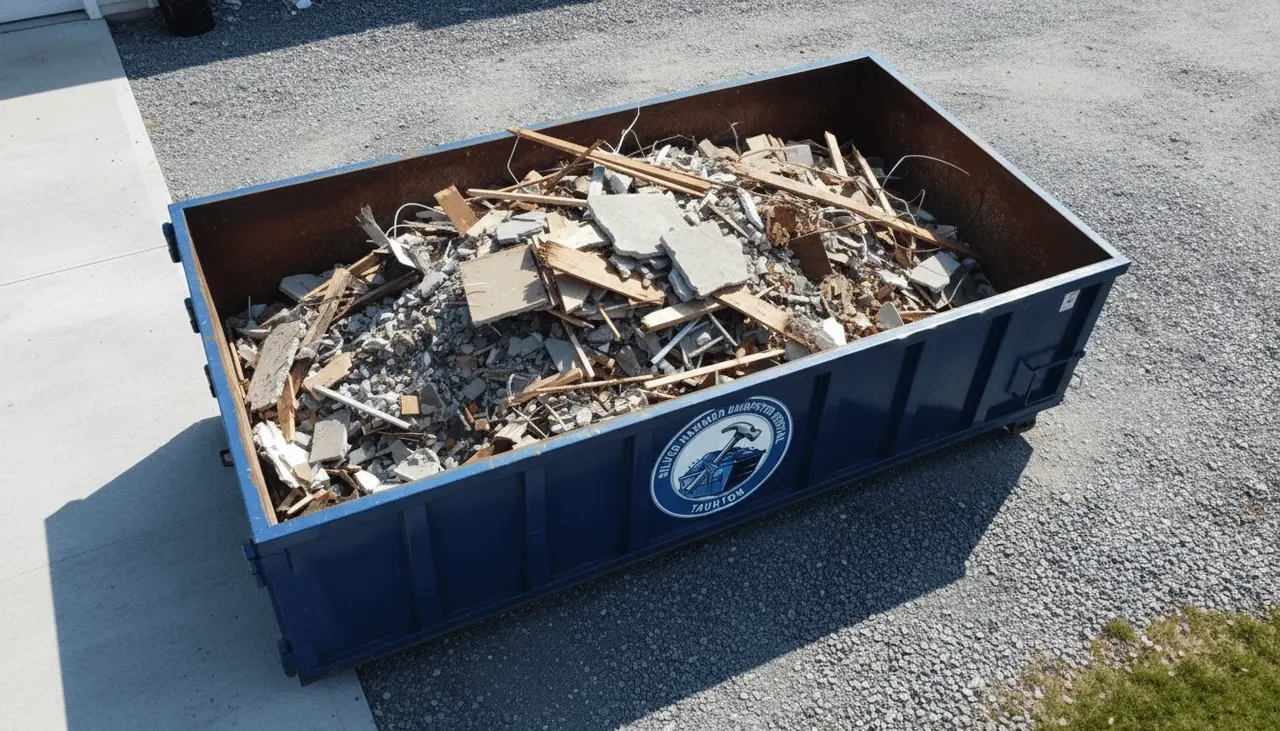
Taunton's Silver City mill buildings and triple-deckers are a steady source of renovation work, and it's common to find old bedding, mattresses, and abandoned furniture left behind in a unit being gutted, alongside the construction debris itself. A construction dumpster or demolition debris container is sized and priced for drywall, flooring, framing lumber, and similar material — not for mattresses, which take up disproportionate space and, as of this ban, legally can't go in anyway. Flag them for the crew early so they're set aside rather than buried in the pile partway through the tear-out.
How to Handle a Mattress or a Load of Textiles the Right Way
Check condition first. A mattress that's clean and structurally sound may be donatable to a local charity or reuse organization — check MassDEP's Beyond the Bin Recycling Directory for options near Taunton.
Use retailer haul-away when buying new. Most mattress retailers will remove your old mattress when they deliver a new one — often the easiest option if you're already replacing it.
Bring unusable mattresses to the Convenience Center. Expect a per-unit fee, and make sure the mattress is dry and free of visible mold or pest damage or it may be turned away.
Bag clean textiles for donation, not the dumpster. Clothing, towels, and linens — even worn or stained — belong in a Bay State Textile bin or a charitable donation drop, not a trash bag.
When in doubt, ask before the container arrives. A quick call to Silver Hammer or a look at our FAQ page can settle what belongs in the dumpster and what needs a separate trip.
Sizing the Rest of Your Cleanout
Once mattresses and textiles are pulled out of the equation, the remaining debris — furniture, boxes, construction waste, general junk — is what actually determines the dumpster size you need. A single-room cleanout or small renovation often fits comfortably in a 15-yard dumpster, while a whole-house estate cleanout or larger remodel usually calls for a 20-yard container or bigger. Our dumpster size guide walks through all five sizes with real project examples if you're not sure where your job lands.
Silver Hammer Dumpster Rental has been serving Taunton and the surrounding Bristol and Plymouth County towns since 2013, and we field questions about this exact ban regularly — it's one of the most commonly misunderstood rule changes among homeowners and landlords doing a cleanout for the first time since 2022. If you're planning a project and aren't sure what can go in the container and what needs separate handling, contact us before you book and we'll walk you through it.
Silver Hammer Dumpster Rental
Written by the team that runs the trucks out of our yard on 37 Cushman St in Taunton. We haul
roll-offs across Bristol County, Plymouth County and the wider Taunton area every week. Questions about your own job?
Call (774) 504-5393.
Talk to a real person
Ready to book a container in Taunton?
Call and describe the job. Flat price, stated tonnage, and a delivery time on the same call.
Can I put a mattress in a dumpster rental in Taunton?
No. Since November 1, 2022, MassDEP has banned mattresses and box springs from disposal at any Massachusetts landfill, incinerator, or transfer station, which means they can't go in a mixed-debris roll-off dumpster either. In Taunton, unusable mattresses need to go to the City Convenience Center at 330 East Britannia Street for a per-unit fee, or be handled through a retailer haul-away or donation program instead.
What happens if banned items end up in my dumpster anyway?
Disposal facilities are required to screen incoming loads for banned materials and can reject or surcharge a load that contains them. Since that cost typically flows back to the hauler and the customer who booked the container, it's worth sorting out mattresses, box springs, and textiles before pickup rather than risking a rejected or re-billed load.
Where can I recycle or donate a mattress in Taunton?
Options include the City of Taunton Convenience Center (a per-unit fee applies, and mattresses must be reasonably dry and free of mold or pest damage), retailer haul-away when you buy a replacement, or a local donation organization if the mattress is still in usable condition. MassDEP's Beyond the Bin Recycling Directory is a good statewide resource for locating additional drop-off and recycling options.
What exactly counts as "textiles" under the Massachusetts ban?
MassDEP defines textiles broadly to include clothing, bedding, curtains, towels, footwear, and similar fabric items. They qualify for recovery even if worn, torn, or stained, as long as they're reasonably clean and dry. Clean textiles can go into Bay State Textile donation bins, including the ones located at Taunton Public Schools sites and the city's Convenience Center.
Does the mattress and textile ban apply outside Taunton too, like in Raynham or Berkley?
Yes, the ban is a statewide MassDEP regulation, so it applies everywhere in Massachusetts, not just in Taunton. What varies from town to town is the local logistics, like whether mattresses are accepted at a transfer station, what fee applies, and where textile donation bins are located, so it's worth checking your specific town's solid waste or DPW page before your cleanout.
Massachusetts bans more from your dumpster than you'd think — asphalt, tires, batteries, appliances, and, since 2022, mattresses and textiles. Here's the full MassDEP list, why each item is banned, and where it actually goes.
Driveway placement almost never needs a permit, but a dumpster sitting in a Taunton street does. Here's why the rule exists, what Taunton's code actually says, and how to sort out your own address before delivery day.
Old plaster, older insulation, and pre-1978 lead paint make mill-loft and triple-decker renovations different from a standard remodel. Here's what to plan for before the dumpster shows up.