Massachusetts Waste Ban List Explained | Taunton, MA
Massachusetts bans more from your dumpster than you'd think — asphalt, tires, batteries, appliances, and, since 2022, mattresses and textiles. Here's the full MassDEP list, why each item is banned, and where it actually goes.
9 min readUpdated 2026-02-17By Silver Hammer Dumpster Rental
Rent a dumpster in Taunton and the container that shows up looks like it will take anything. It won't. Massachusetts runs one of the strictest statewide waste ban programs in the country, and a surprising number of everyday renovation and cleanout items are flatly prohibited from landfill disposal — no exceptions for "it's just one." Knowing the list before your dumpster arrives saves a return trip, an extra fee, and in some cases a rejected load at the transfer station.
This guide walks through every category on the current MassDEP waste disposal ban list, explains why the state banned each one, and tells you what a Silver Hammer customer should pull out of a load before it leaves a Taunton driveway.
Why Massachusetts Bans These Materials in the First Place
MassDEP's waste bans fall into three broad reasons, all tracing back to a simple problem: Massachusetts has very little in-state landfill capacity left, and every ton that goes into a landfill instead of a recycling stream shortens the life of that capacity further.
Landfill capacity protection. Bulky, slow-to-degrade material — asphalt, brick, concrete, wood, whole tires — eats disposal capacity the state doesn't have to spare. Diverting it to recycling or reuse is a capacity-management decision as much as an environmental one.
Hazardous or toxic content. Lead-acid batteries, CFC-containing appliances, and cathode ray tubes contain materials that can leach into soil and groundwater or release into the air if crushed and buried. These require controlled handling, not a landfill cell.
Recoverable value. Metal, paper, cardboard, glass, and plastic containers all have functioning recycling markets. Landfilling something a recycler would pay for wastes value the ban is meant to keep flowing into the recycling stream instead.
The list has grown over time. The most recent expansion took effect November 1, 2022, adding mattresses, box springs, and textiles — a change that catches many Taunton-area renters off guard, since those items feel like ordinary trash rather than regulated waste.
The Full MassDEP Waste Ban List
The table below groups the current statewide bans by category. All of these are prohibited from disposal in a landfill or combustion facility in Massachusetts — a roll-off dumpster headed to a transfer station is subject to the same rules as curbside trash.
Banned material
Primary reason for the ban
What usually happens to it instead
Asphalt pavement, brick & concrete
Landfill capacity — bulky, heavy, inert
Crushed and reused as aggregate/base material
Metal & white goods (appliances)
Recoverable scrap value; some hazardous components
Scrap metal recycling
Wood & wood waste
Landfill capacity (banned from landfills specifically)
Chipped for mulch/biomass or reused
Clean gypsum wallboard (drywall)
Recyclable construction material; can release odor/gas if landfilled
Ground and recycled into new wallboard or soil amendment
Whole tires
Landfill capacity (banned from landfills; shredded tires are permitted)
Shredded for tire-derived fuel or rubber products
Lead-acid batteries
Hazardous, toxic lead and acid content
Retailer take-back and battery recycling
CFC-containing appliances
Ozone-depleting/greenhouse refrigerants
Certified refrigerant recovery before recycling
Cathode ray tubes (CRTs)
Leaded glass, hazardous electronic waste
Specialty electronics recycler
Yard waste (leaves & grass clippings)
Compostable organic material; separate ban from general trash
Construction & Demolition Materials: Asphalt, Brick, Concrete, Wood, Drywall
This block hits Taunton renovation and demolition jobs the hardest, since these are exactly the materials a driveway teardown, foundation repair, or interior gut job produces. Asphalt, brick, and concrete are banned largely because of sheer weight and volume — a small load can weigh more than a dumpster's rated capacity, and landfilling material that crushes cleanly into usable aggregate wastes both capacity and value. Wood is banned specifically from landfills (it can still be processed elsewhere), again a capacity call given how much demolition and land-clearing work generates.
Clean gypsum wallboard — ordinary drywall with no paint, wallpaper, or contamination — is banned because it's readily ground down and recycled into new wallboard, and because wet, buried drywall can generate hydrogen sulfide gas in a landfill. Given how many older Taunton mill buildings and triple-deckers are mid-renovation at any time, this is worth flagging before a demo dumpster gets loaded — heavy masonry often needs its own container weight class. See our concrete & heavy debris dumpster service for how that's typically handled separately from a standard construction dumpster rental or a full demolition debris removal project.
Metal, White Goods & CFC-Containing Appliances
Scrap metal and "white goods" (refrigerators, washers, dryers, stoves, water heaters) are banned because they carry real recycling value and some contain components that shouldn't be crushed and buried. The wrinkle homeowners miss: refrigerators, freezers, window air conditioners, and dehumidifiers that still hold refrigerant fall under a separate hazard category — CFC-containing appliances — because those refrigerants are ozone-depleting and potent greenhouse gases if released. Federal rules under the Clean Air Act (enforced through EPA Section 608) require a certified technician to recover the refrigerant before the unit is scrapped or recycled. A roll-off dumpster isn't the right path for a working or recently-working refrigerant appliance — it needs recovery first, typically through a retailer take-back program, municipal collection, or a certified technician.
Tires, Batteries & Cathode Ray Tubes
Whole tires are banned from landfill disposal because they take up disproportionate volume and don't compact — shredded tires are permitted, which is why recyclers process them first. Lead-acid batteries (car, marine, and most equipment batteries) are banned outright for their lead and sulfuric acid content; nearly every auto parts retailer in the Taunton area will take a used battery back, often for a deposit refund. Cathode ray tubes — the leaded glass tubes inside older televisions and computer monitors — are banned because that glass contains enough lead to qualify as hazardous waste if crushed and buried. None of these three belong in a roll-off dumpster; each needs a dedicated recycling path.
Yard Waste and the Separate Organics Ban
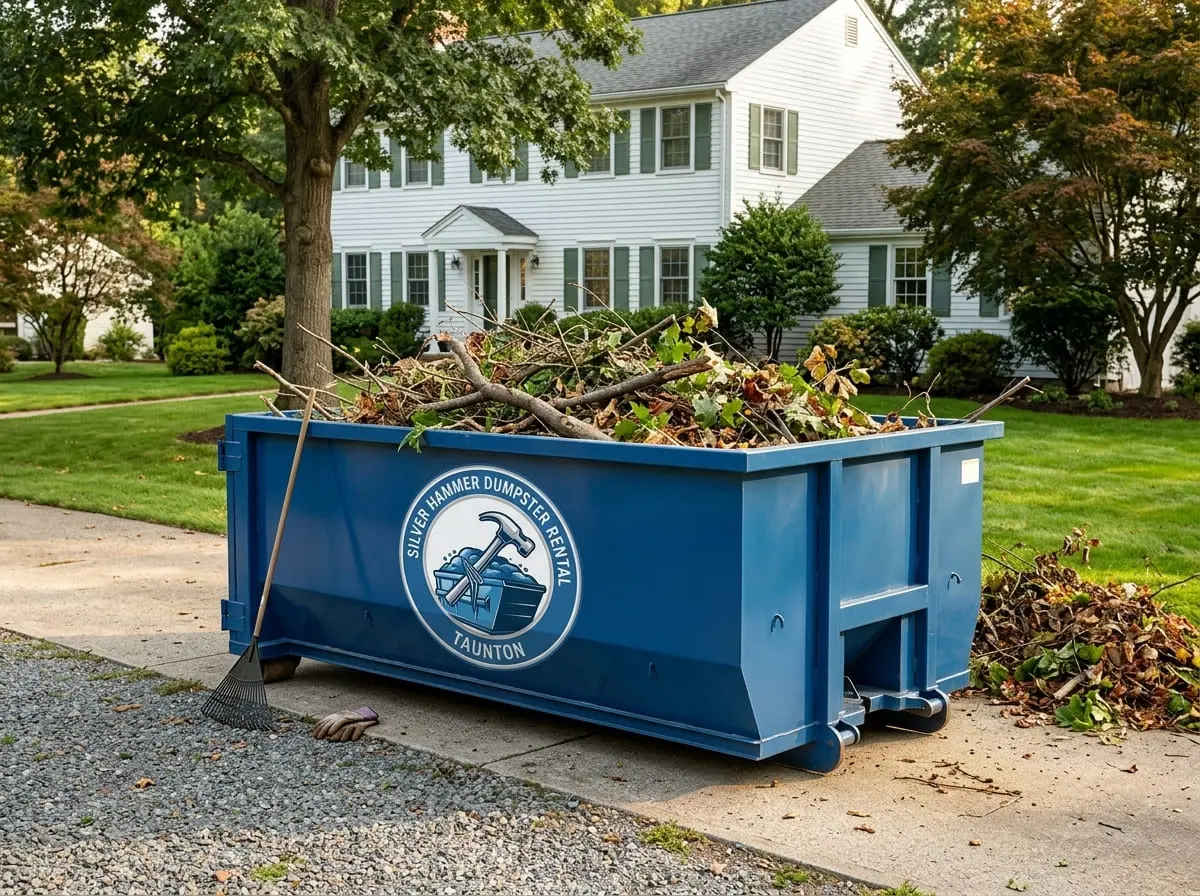
Leaves and grass clippings are banned from regular trash disposal because they're compostable, and organic material breaks down in a landfill in a way that generates methane, a greenhouse gas far more potent than CO2. This ban runs on its own track from construction debris — a homeowner clearing storm-damaged limbs in Raynham or Berkley needs a yard-waste-specific route, not a general dumpster loaded with brush mixed into demolition material. Our yard waste dumpster rental service covers how that's handled separately, particularly relevant after the wet, heavy snow loads and downed limbs a typical nor'easter leaves behind.
Recyclable Paper and Recyclable Containers
Cardboard, office paper, newspaper, and paperboard are banned from disposal because the fiber has recycling value and an established municipal stream already exists for it. The same logic applies to glass, metal, and plastic containers — bottles, cans, jars, jugs, and tubs. These bans aim more at curbside trash than construction dumpsters, but they matter during a whole-house cleanout or estate cleanout, where boxes of old paperwork and a garage full of jars and cans are common finds. Sorting those into municipal recycling first keeps the load compliant and, often, cheaper.
The 2022 Additions: Mattresses, Box Springs & Textiles
Effective November 1, 2022, MassDEP added mattresses and box springs to the waste ban, along with textiles — clothing, linens, curtains, and similar fabric items, regardless of condition. This is the newest part of the list and the one most people haven't caught up with yet, because a stained mattress or a bag of worn-out clothes feels like ordinary trash rather than regulated waste.
Mattresses and box springs are banned because they're bulky and their steel innerspring, foam, and fiber components are recoverable through deconstruction programs. Textiles are banned because most fabric — even torn or stained items — is reusable through donation or recyclable into fiber, insulation, or wiping rags, and textile waste had become a large, growing share of what was going into Massachusetts landfills. It's one of the least-understood rules affecting anyone doing a bedroom cleanout, move, or junk removal job in the Taunton area.
What to Pull Out of Your Dumpster Before It Gets Hauled
The practical question is "what do I need to set aside." Before a load goes out, walk it and pull:
Any mattress, box spring, or futon frame padding
Bagged or boxed clothing, linens, curtains, and other fabric
Refrigerators, freezers, window AC units, or dehumidifiers that still hold refrigerant
Car, marine, or equipment batteries
Old televisions or computer monitors with a tube (not flat-screen)
Whole tires
Loose leaves, grass clippings, or brush piled in with construction debris
Large, separable piles of concrete, brick, or asphalt (these often need their own container anyway due to weight limits)
Boxes of paper/cardboard and bins of bottles, cans, or jars that municipal recycling would take for free
Everything else on a typical residential or construction job — general debris, furniture, non-CFC appliances with the compressor already removed, scrap wood, general junk — is fair game for a standard roll-off. If you're unsure whether something in a specific project qualifies, ask before the container is dropped. Our residential dumpster rental and roll-off dumpster rental teams can walk through a project scope with you at booking.
Where Banned Items Actually Go
None of these bans mean an item has no disposal route — just a different one than a mixed-debris dumpster. In practice, banned materials from a Taunton-area household or job site typically get handled through one of these channels:
Municipal transfer stations and DPW collection programs — most Bristol and Plymouth County towns run separate collection or drop-off for yard waste, white goods, and sometimes mattresses or tires, often for a modest fee. Check your town's public works or transfer station page for current rules, since programs vary town to town.
Specialty recyclers — CRTs, CFC-containing appliances, and lead-acid batteries typically go through dedicated electronics or appliance recyclers, since they require certified handling.
Retailer take-back programs — most auto parts stores accept old batteries, and some appliance retailers offer haul-away or trade-in credit on a new refrigerator or washer.
Donation and textile recovery — usable clothing, linens, and household textiles can go to local donation drop-offs or dedicated textile recovery bins instead of the trash.
Curbside recycling — paper, cardboard, and glass/metal/plastic containers belong in your regular municipal recycling stream, not a construction dumpster.
We don't operate these specialty streams ourselves, but we're glad to point a customer toward the right kind of drop-off when we're scoping a job.
What Happens If Banned Items End Up in the Load Anyway
Transfer stations and landfills in Massachusetts screen incoming loads for banned material, and a dumpster with a visible mattress, tires, or a chest freezer sitting on top can get flagged, sorted out, or rejected outright — usually meaning a delay and an extra handling charge. It's far cheaper and faster to sort banned items out at the curb than to have a load bounced at disposal. If a job will generate a lot of one banned category — a full re-roof generating shingles, or a demo job producing a mountain of concrete — it's worth asking about the right container upfront. Our roofing dumpster rental and commercial dumpster rental pages cover how we scope those larger, more uniform loads.
Planning Around the Waste Ban Before You Book
The easiest way to stay compliant is to think through what a project will actually generate before the dumpster shows up: a bedroom cleanout with a mattress needs a separate plan, a re-roof needs shingle-weight sizing, and a mill-loft renovation generating drywall and old plumbing needs the right container from the start. Our dumpster size guide and full services list cover the options — contact us or call (774) 504-5393 and we'll help you plan a load that clears disposal without a hitch, whether you're in Taunton or one of the surrounding Bristol and Plymouth County towns we serve.
Silver Hammer Dumpster Rental
Written by the team that runs the trucks out of our yard on 37 Cushman St in Taunton. We haul
roll-offs across Bristol County, Plymouth County and the wider Taunton area every week. Questions about your own job?
Call (774) 504-5393.
Talk to a real person
Ready to book a container in Taunton?
Call and describe the job. Flat price, stated tonnage, and a delivery time on the same call.
It's a state regulation that prohibits certain materials from being disposed of in a Massachusetts landfill or combustion facility, regardless of who's hauling them. It applies to household trash, construction dumpsters, and commercial haulers alike — the material itself is banned from that disposal path, not just from curbside pickup.
Can I still put a mattress in a dumpster in Taunton?
No. Mattresses and box springs have been banned from disposal statewide since November 1, 2022. They need to go through a mattress recycling or donation route instead of a general roll-off dumpster or the regular trash.
What happens if a banned item ends up in my dumpster by accident?
Transfer stations and landfills screen incoming loads, and a banned item found in the mix can get the load flagged, sorted out, or rejected — usually with a delay and an added handling charge. It's much simpler to pull banned items out before the container is picked up.
Are appliances like refrigerators banned from dumpsters?
Refrigerators, freezers, and other appliances that still hold refrigerant are banned because of the ozone-depleting CFC refrigerant inside — federal rules require a certified technician to recover that refrigerant before the unit can be scrapped. Appliances with the refrigerant already removed are generally fine as scrap metal.
Where can I take banned items if they can't go in the dumpster?
It depends on the item: yard waste, white goods, and sometimes mattresses or tires often have a municipal transfer station or DPW drop-off program; batteries usually go back to an auto parts retailer; electronics like CRTs need a specialty electronics recycler; and clothing and linens can go to a donation drop-off or textile recovery bin. Check your town's public works page for local specifics.
Driveway placement almost never needs a permit, but a dumpster sitting in a Taunton street does. Here's why the rule exists, what Taunton's code actually says, and how to sort out your own address before delivery day.
Old plaster, older insulation, and pre-1978 lead paint make mill-loft and triple-decker renovations different from a standard remodel. Here's what to plan for before the dumpster shows up.
Heavy wet snow, downed limbs, and ice dam roof damage are a fact of winter in Bristol County. Here's how Taunton homeowners and contractors size and schedule a dumpster for nor'easter cleanup.