Mill Loft & Triple-Decker Renovation Debris Guide
Old plaster, older insulation, and pre-1978 lead paint make mill-loft and triple-decker renovations different from a standard remodel. Here's what to plan for before the dumpster shows up.
ReadTaunton, MA guide
Driveway placement almost never needs a permit, but a dumpster sitting in a Taunton street does. Here's why the rule exists, what Taunton's code actually says, and how to sort out your own address before delivery day.
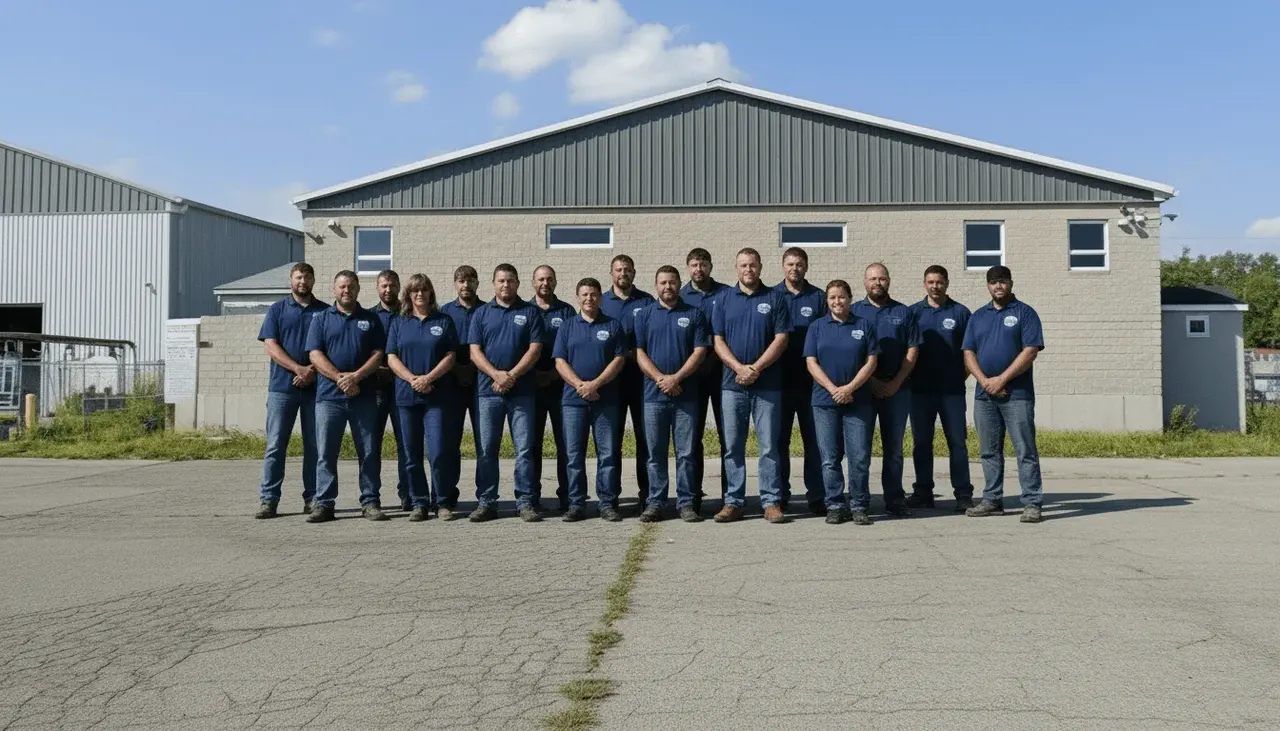
Most dumpster rentals in and around Taunton never touch a permit office. Drop a roll-off in your own driveway, and in the overwhelming majority of cases you can start loading it the same afternoon it arrives. The question only gets complicated when there is nowhere on the property to put the container and it has to sit on the street instead — along the curb in front of a triple-decker with no driveway, for instance. That is the line nearly every Massachusetts city and town draws, and Taunton draws it too: private property is yours to manage, the public way belongs to everyone, and putting a large steel box on it requires the city's sign-off first.
This guide covers why that distinction exists, what Taunton's own regulations actually say, what the general permit process looks like across Bristol and Plymouth County, what happens if a container ends up in the street without one, and how Silver Hammer Dumpster Rental helps customers sort out which category their project falls into before delivery day.
A roll-off dumpster parked on a driveway is a private matter between a homeowner and their contractor. One parked on a street is different: it narrows a travel lane, can block sight lines at a driveway or intersection, forces cyclists and pedestrians around it, and becomes an obstacle for emergency vehicles, plow trucks, and street sweepers. Cities regulate that not to make life harder for property owners, but because the street is shared infrastructure and the municipality is on the hook for what happens on it.
Three concerns drive almost every version of this rule, in Taunton and everywhere else in New England:
None of this applies when a container sits fully on private property with the owner's permission. The permit question always comes back to one thing: where, physically, is the dumpster going to sit?
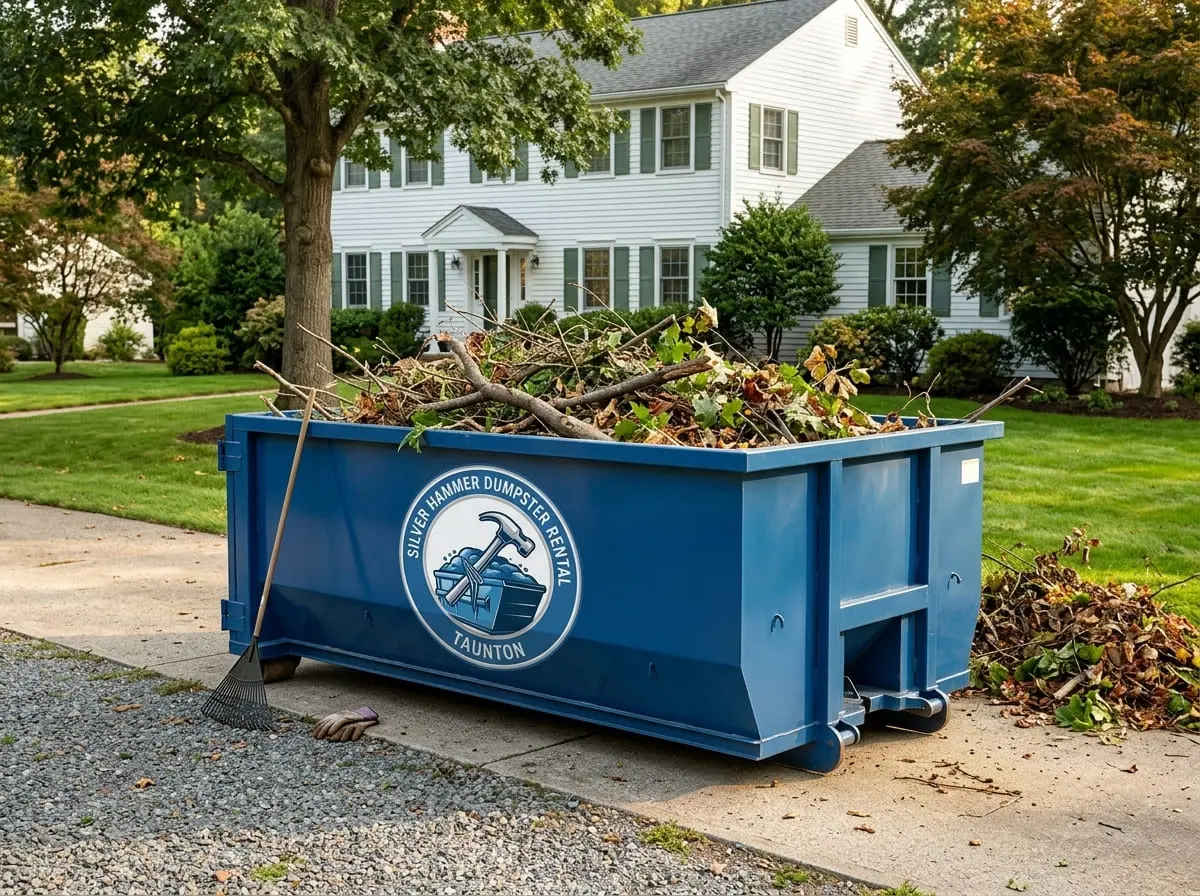
If a driveway, private lot, or other paved area on the property can fit a 10, 15, 20, 30, or 40 yard container with room for the delivery truck to maneuver, that is almost always permit-free. This covers the majority of residential jobs Silver Hammer delivers for around Taunton, Raynham, Dighton, Berkley, and the rest of Bristol and Plymouth County — a kitchen gut, a basement cleanout, a roofing tear-off, a small addition. The property owner controls that space, so the city has no reason to be involved. A few practical notes still apply even off the street:
See our residential dumpster rental and dumpster size guide pages for help matching a container to a driveway job, and our roll-off dumpster rental page for how delivery and pickup actually work.
Taunton's city code addresses containers in the public way directly. Chapter 383 of the city's General Regulations, under the section governing obstruction of streets, prohibits leaving a dumpster or other vehicle in a street or way so that it obstructs traffic once the Mayor, the Police Chief, or a police officer has ordered it removed. In practice, that means the city has clear authority to have an unpermitted or improperly placed container towed or hauled away at the owner's expense — exactly the scenario a permit is meant to prevent by getting city sign-off before the container arrives, rather than after a complaint comes in.
Taunton also maintains a separate ordinance requiring an annual permit, issued through the City Clerk's office, for donation "drop boxes" — the smaller collection bins used for clothing and textile donations outside plazas and churches. That ordinance is worth knowing about only because it is easy to confuse with dumpster permitting: it explicitly does not apply to trash receptacles or roll-off dumpsters, which fall under separate public works and street-obstruction rules. If you are renting a roll-off container, the drop-box permit is not the one you need.
What we can confirm from the city's own published materials is that Taunton's Department of Public Works, at 90 Ingell Street, does maintain a dumpster-specific permit application and regulation on file for containers that need to occupy a public street or way. What we cannot responsibly publish here without a current copy in hand is the exact fee, the current application form's specific fields, or this year's processing timeline — municipal fee schedules and forms change, and guessing at a dollar figure or a business-day turnaround would do you a disservice. The reliable move is the same one we tell every customer: call Taunton DPW or check the Public Works page at taunton-ma.gov for the current form and fee before you plan a street placement, and let us help you time the request around your delivery date.
Even where we have not pulled the current fee schedule for a given town, the shape of a street-occupancy or obstruction permit is consistent across Massachusetts cities and towns. Most municipal processes share the same handful of elements:
Because this list is close to universal but not identical from one DPW to the next, the safest habit is simple: if the container cannot fit entirely on private property, call the town before booking delivery, not after the truck is already scheduled.
| Placement scenario | Permit typically needed? | Who to check with |
|---|---|---|
| Fully on a driveway or private lot | No | N/A — property owner's decision |
| Partially over a sidewalk, still on private property | Usually no, but confirm sidewalk isn't blocked for pedestrians | Town DPW if any doubt |
| In a curbside parking lane or on the street | Yes, in most Bristol/Plymouth County towns | Town DPW or City Clerk |
| Blocking a marked travel lane | Yes, and may require police detail or extra approval | Town DPW and/or police department |
| On a private commercial lot (with owner permission) | No | Property/business owner |
Silver Hammer delivers well beyond Taunton city limits, into Raynham, Berkley, Dighton, Rehoboth, Norton, Easton, Mansfield, Middleborough, Lakeville, Freetown, Bridgewater, West Bridgewater, East Bridgewater, Attleboro, North Attleborough, Seekonk, and Somerset. Every one of these communities has its own Department of Public Works, its own permitting office, and, in many cases, its own fee schedule and form — and those details are not identical to Taunton's, or to each other's. Rather than guess at rules for towns we have not pulled a current ordinance for, our honest advice is the one a good contractor would give: if a driveway or private lot cannot hold the container, call your town's DPW or highway department before your delivery date and ask directly whether a street-occupancy or obstruction permit is needed, how far ahead they need the request, and what the current fee is.
The underlying logic holds town to town: private-property placement is essentially never a permit issue anywhere in the region, and public-way placement almost always is. Smaller towns without an online permit portal may just want a phone call to the DPW or highway garage; others handle it through the town clerk. None of that changes the basic driveway-versus-street test above.
Browse our full service area list for the towns we cover, or see individual town pages such as Raynham, Easton, and Attleboro for local delivery notes.
Skipping a required street permit is not a paperwork technicality — it carries real consequences. Under Taunton's own street-obstruction rule, a container left in a street or way can be ordered removed by the Mayor, the Police Chief, or a police officer, and failing to move it is itself a violation. Practically, that plays out a few ways:
None of this is designed to catch anyone off guard. A temporary steel container sitting where cars, plow trucks, and pedestrians expect open pavement is genuinely riskier than one sitting in a driveway, and the permit process is simply the city's way of managing that risk in advance instead of after an incident.
We would rather have this conversation during the booking call than have a customer find out the hard way that a container needs to move. When you call Silver Hammer to book a roll-off dumpster, construction dumpster, or a same-day rental, part of that call is talking through where the container will actually sit:
We are not a permitting authority and cannot pull a permit on your behalf, but we can make sure you are asking the right office the right question before delivery day, not after. Visit our FAQ page, browse the full list of services, or contact us and we will help you figure out driveway versus street before we schedule a truck.
Talk to a real person
Call and describe the job. Flat price, stated tonnage, and a delivery time on the same call.
Mon–Sat 7:00am – 6:00pm · Sun by appointment
From this guide
In the vast majority of cases, no. If the container sits entirely on your driveway or another paved private area with the owner's permission, Taunton does not require a street or public-way permit for it. Permits come into play specifically when a container has to sit in the street, in a curbside parking lane, or otherwise on public property.
Taunton's General Regulations, Chapter 383, includes an obstruction-of-streets provision that lets the Mayor, the Police Chief, or a police officer order a dumpster or other vehicle removed if it is obstructing a street or way. That gives the city clear authority to require removal of an improperly placed or unpermitted container, which is exactly the situation a street-occupancy permit is meant to prevent.
No, and this is a common mix-up. Taunton has a separate ordinance requiring an annual permit through the City Clerk for donation collection "drop boxes," like clothing donation bins. That ordinance specifically excludes trash receptacles and dumpsters, which are handled under different public works and street-obstruction rules. If you are renting a roll-off container, look to the city's dumpster/street-placement process, not the drop-box permit.
Timelines vary by town, but a few business days ahead of your planned delivery is a reasonable minimum to plan around, and longer if a specific parking space needs to be posted in advance. Because exact lead times differ between Taunton and surrounding towns, the safest step is to call the relevant DPW or clerk's office directly once you know your delivery window, and we are happy to help you time that call.
Most Massachusetts towns apply the same basic logic Taunton does: private property placement is essentially never a permit issue, while placement in the street or public way generally is. Exact forms, fees, and lead times differ by town and are not all published online, so we recommend calling your town's DPW or highway department directly to confirm current requirements rather than assuming one town's process matches another's.
Keep reading
Old plaster, older insulation, and pre-1978 lead paint make mill-loft and triple-decker renovations different from a standard remodel. Here's what to plan for before the dumpster shows up.
ReadHeavy wet snow, downed limbs, and ice dam roof damage are a fact of winter in Bristol County. Here's how Taunton homeowners and contractors size and schedule a dumpster for nor'easter cleanup.
ReadClearing a family home is never just a hauling job. Here's a practical, respectful checklist for sorting keepsakes, deciding what to donate, and sizing a dumpster for a full Taunton-area estate cleanout.
Read