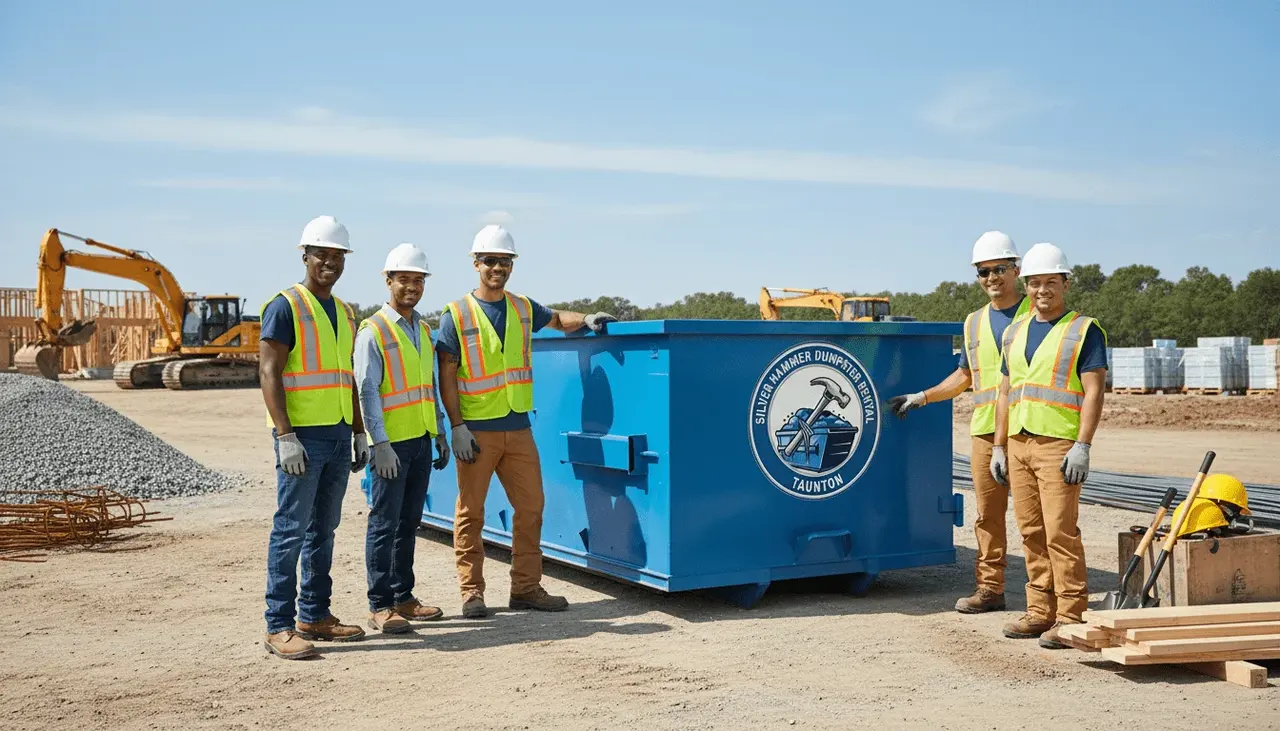
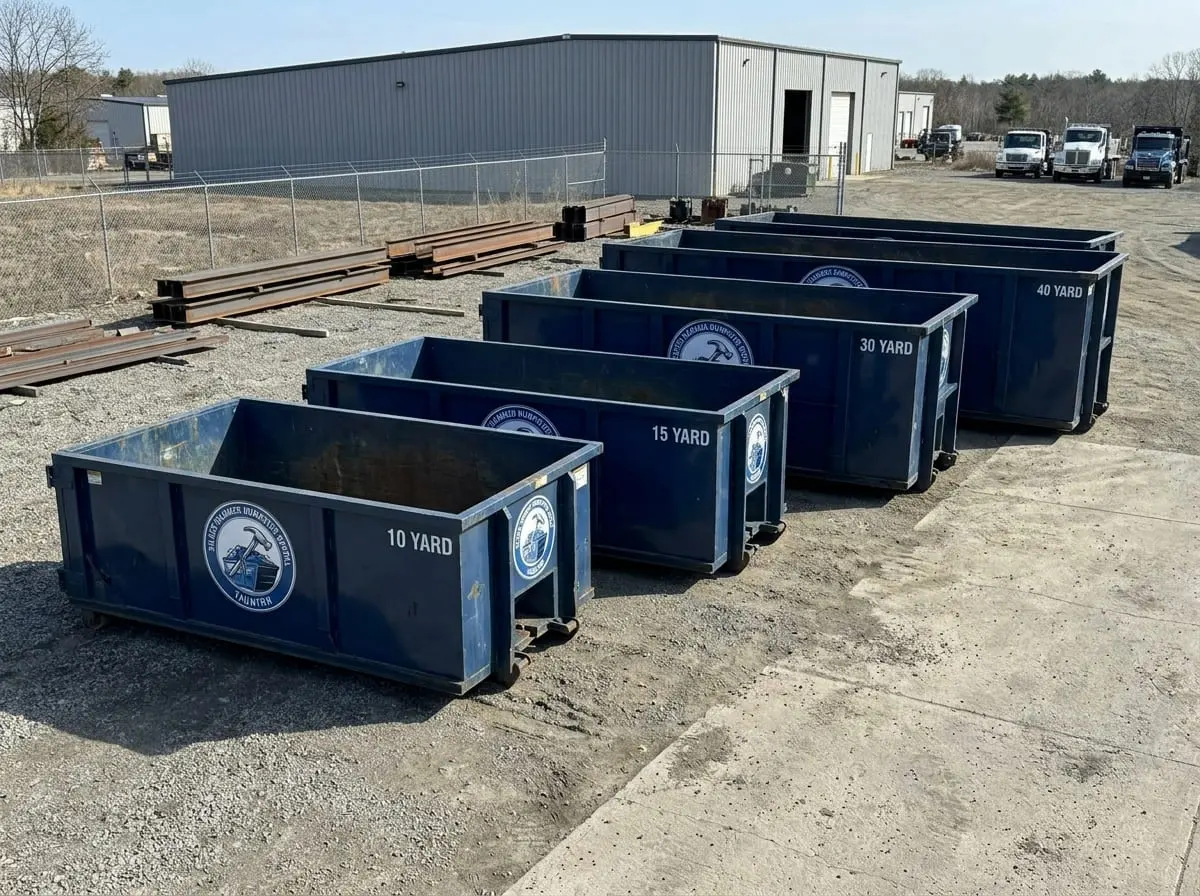
Construction Debris Near Taunton's Route 24/495 Corridor
Taunton sits at the junction of Route 24 and I-495, and the warehouses, business parks, and housing rising along that corridor bring a different debris problem than a kitchen remodel. Here's how commercial and industrial job sites differ from residential ones, and how a multi-container, scheduled-swap dumpster service keeps a busy corridor build on schedule.
9 min readUpdated 2026-04-03By Silver Hammer Dumpster Rental
Taunton has always been a crossroads. Route 24 runs north-south through the city on its way between Fall River and Brockton, and I-495 arcs through Southeastern Massachusetts just a few miles from downtown, tying Taunton into the regional highway loop that connects Boston, Providence, and Cape Cod traffic. That geography is exactly why the area around the Route 24/I-495 corridor has become one of the more active construction zones in Bristol County over the past several years — industrial parks, distribution space, retail pads, and new housing all competing for land near an interchange that trucks, commuters, and freight all rely on.
Taunton's own development corporation has spent years marketing sites like Myles Standish Industrial Park and the business parks along the Route 24/140 interchange area to manufacturers, logistics tenants, and distribution operators, and the results are visible from the highway: large-format warehouse and distribution buildings, expanding business parks, and steady leasing activity in industrial space near East Taunton. Retail and mixed-use development has followed the same corridor, and housing projects continue to fill in around it as the region absorbs growth that used to concentrate closer to Boston. None of that happens without a lot of construction debris, and it doesn't look anything like what comes out of a residential renovation.
Silver Hammer Dumpster Rental has hauled for jobs up and down this corridor for years — from single-trade residential work in older Taunton neighborhoods to multi-building commercial projects near the highway. This article covers how commercial and industrial debris differs from residential debris, what a multi-container scheduled-swap service actually looks like on an active site, and how we support general contractors and subcontractors building in and around the Route 24/I-495 corridor.
How Commercial and Industrial Debris Differs From Residential
A homeowner tearing out a kitchen or finishing a basement generates debris in a fairly predictable, contained way: one dumpster, dropped once, filled over a week or two, and hauled away. Commercial and industrial construction runs on a completely different scale and rhythm, and the differences matter for how a hauler plans the job.
Volume
A single residential remodel might fill one 15 or 20 yard dumpster over the life of the project. A ground-up commercial building, a warehouse fit-out, or a multi-unit housing phase can generate that much debris in a single framing or demo week — and keep generating it at that pace for months. Where a homeowner project is measured in a container or two, a commercial job near the corridor is often measured in dozens of pulls before the certificate of occupancy is issued.
Material Mix
Residential debris tends to be mixed: drywall, old cabinetry, flooring, some wood framing, household junk, maybe roofing shingles. Commercial and industrial sites separate more by trade and by phase. Site work and demolition produce concrete, asphalt, and masonry. Structural phases produce steel, dimensional lumber, and engineered wood waste. Interior fit-out produces drywall, ceiling tile, wiring, packaging cardboard, and pallet waste in bulk — a distribution building fit-out alone can generate a steady stream of shrink wrap, banding, and pallet debris that never really shows up on a residential job. Because Massachusetts bans several of these materials from regular disposal, keeping loads sorted by material (rather than one mixed container for everything) usually saves money and keeps a project compliant.
Scheduling With General Contractors
This is where the difference is most operational. A homeowner calls, picks a delivery day, and schedules a pickup when the dumpster is full. A general contractor running a corridor project is coordinating a container schedule against a critical path: framing crews need a clear laydown area by a specific date, the electrical rough-in can't start until debris is cleared from a bay, and a full container sitting in the wrong spot can block a crane path or a delivery truck. On these jobs we work off the GC's schedule, not the other way around — agreeing on swap windows, placement zones, and who signs off on each pull before the job even starts.
Factor
Residential Project
Commercial/Industrial Project
Typical container count
1–2 over the whole job
Multiple containers, ongoing swaps
Debris rhythm
Fills gradually over days/weeks
Fills fast in trade-specific phases
Material sorting
Often mixed load
Sorted by material (concrete, wood, metal, C&D)
Scheduling driver
Homeowner convenience
GC's critical path and site logistics
Placement
Driveway, usually no permit
Staged laydown area, may need street/site permit
Point of contact
Homeowner
Superintendent or project manager
Multi-Container, Scheduled-Swap Service for Active Jobsites
An active jobsite along the corridor doesn't need "a dumpster." It needs a debris management plan that flexes with the schedule. That's the core of our approach for commercial and industrial accounts:
Multiple containers on site at once. A larger job might run a 30 yard container for general C&D near the building and a separate 20 yard container or a dedicated bin for concrete and masonry at the site-work zone, so trades aren't fighting over one box.
Scheduled swaps instead of call-when-full. On a fast-moving framing or demo phase, we'll set a standing swap schedule — every two or three days, or whatever the pace of debris demands — so a full container never sits idle waiting for someone to notice it and call.
A single point of contact. We work with the superintendent or PM directly rather than routing every swap request through a general office line, which matters when a schedule shifts on short notice.
Weight-aware sizing. Concrete, brick, and masonry are heavy in small volumes — a dedicated concrete and heavy debris container, sized correctly, avoids overweight fees that a general C&D box would rack up fast.
Same-day support when a schedule slips. Weather delays, inspection holds, and change orders happen. When a container needs to move faster than the standing schedule allows, same-day service is available for jobsites already on account with us, subject to availability.
This kind of coordination is standard for the industrial and business-park work near Myles Standish and the Route 24/140 area, where multiple subcontractors can be on site simultaneously and a poorly placed or poorly timed container becomes everyone's problem. It's also increasingly common on the mid-size commercial and mixed-use projects filling in along the corridor's retail and housing pads, where the site footprint is tighter and container placement has to be planned around parking, access, and neighboring tenants from day one.
Mill Buildings, New Builds, and Everything Between
The Route 24/I-495 corridor isn't only new construction. Taunton's identity as the historic Silver City means a fair amount of commercial work in and around downtown involves older mill buildings and industrial structures — some converted to loft housing, some repurposed for light commercial use. That work carries its own debris realities: pre-1978 construction can mean lead-based paint, older plaster and lath instead of drywall, and building materials that require more careful handling than a typical demo job. We size and stage containers differently for that kind of interior renovation work than we do for a ground-up warehouse shell, and we can talk through material-handling considerations with a GC before the first container drops. Our demolition debris removal and construction dumpster rental services both support this range of project types, from a single-trade interior renovation to a full site clearing.
On the newer end of the corridor, ground-up commercial and industrial builds generate a more uniform debris stream — site clearing and excavation spoils, concrete and asphalt from paving and foundations, structural steel and wood waste, then a wave of packaging and fit-out debris as the building nears completion. Our commercial dumpster rental and roll-off dumpster rental services cover this range, sized from a single 20 yard container for a smaller retail buildout up to 40 yard roll-offs for high-volume framing and demolition phases. Visit our dumpster size guide for a full breakdown of what each size handles.
Waste Bans and Sorting on a Corridor Jobsite
Massachusetts' waste bans apply to commercial and industrial job sites the same way they apply to a homeowner's driveway dumpster — the material matters, not the size of the project. Under MassDEP's waste disposal bans, asphalt pavement, brick, and concrete; metal and white goods; clean wood; clean gypsum wallboard; and yard waste are all banned from regular disposal facilities and need to be handled through recycling or approved processing streams instead. On a corridor job producing large volumes of concrete, structural steel, and framing lumber, sorting those materials into dedicated containers from the start isn't just good practice — it keeps the project compliant and usually keeps hauling costs lower than paying mixed-C&D rates for material that could have gone into a clean recycling stream.
Before any excavation or underground utility work begins on a corridor site, calling Dig Safe (New England's call-before-you-dig service) is required by law and standard practice for every general contractor and excavation subcontractor working in Massachusetts. It's a small step that has nothing to do with dumpster logistics directly, but it's part of the same pre-mobilization planning conversation we have with GCs about container placement, site access, and swap scheduling — get the logistics sorted before equipment shows up, not after.
Street Permits and Site Access Near the Corridor
Most active commercial and industrial jobsites along the Route 24/I-495 corridor place containers entirely on private property — a laydown yard, a parking area under construction, or a staged zone within the site fence — so street-occupancy permitting usually isn't a factor. Tighter downtown Taunton commercial sites, or projects where a container has to sit on a public way even temporarily, typically do require a permit from the local Department of Public Works before placement. We'll flag this during scheduling if a project's location looks like it needs one, but the GC or site super should always confirm directly with the relevant town or city DPW, since requirements vary by municipality and can change.
How Silver Hammer Supports Contractors Building in the Corridor
We're based at 37 Cushman St in Taunton, which puts us close to the Route 24/I-495 interchange and the industrial parks and business corridors around it, along with the surrounding towns that see the same growth spill over — Raynham, Berkley, Norton, Easton, and Mansfield among them. For contractors working the corridor, that means:
Fast response for container drops, swaps, and pulls without routing a job through a national call center.
Sizing guidance from a crew that's hauled site work, structural debris, and fit-out debris on this exact corridor before, not a generic script.
Dedicated concrete and heavy debris containers separate from general C&D, so a job isn't paying overweight fees on a box that was never meant to hold masonry.
Flexible account terms for multi-phase jobs that need a standing swap schedule rather than a one-time rental.
Coverage across our full service area, so a corridor project with satellite work in a neighboring town doesn't need a second vendor.
If you're bidding or breaking ground on a project along the Route 24/I-495 corridor — a warehouse fit-out, a retail pad, a mixed-use build, or a mill-building renovation downtown — reach out to Silver Hammer before mobilization. We'll work out container sizing, placement, and a swap schedule that matches your actual pace of work, not a generic rental term. You can also browse our full service list to see the range of container and debris-removal services we bring to commercial and industrial accounts across Bristol County.
Silver Hammer Dumpster Rental
Written by the team that runs the trucks out of our yard on 37 Cushman St in Taunton. We haul
roll-offs across Bristol County, Plymouth County and the wider Taunton area every week. Questions about your own job?
Call (774) 504-5393.
Talk to a real person
Ready to book a container in Taunton?
Call and describe the job. Flat price, stated tonnage, and a delivery time on the same call.
How is a commercial dumpster rental for a Route 24/495 corridor project different from a residential rental?
The container itself can be the same style, but the service isn't. Commercial and industrial jobs typically need multiple containers on site at once, a scheduled swap cadence tied to the general contractor's timeline, and material-specific sorting (concrete, metal, wood, general C&D) rather than one mixed box. We coordinate directly with the site superintendent or project manager and build the schedule around the job's actual pace, not a fixed rental period.
Can Silver Hammer keep multiple containers on one jobsite at the same time?
Yes. Larger commercial and industrial projects along the corridor often run a general C&D container alongside a separate dedicated container for concrete or heavy debris, and sometimes an additional box for a specific trade phase. We'll help plan container count, size, and placement zones during pre-mobilization so the site layout works for every trade on the job.
Do we need a street permit to place a container on a commercial jobsite near Taunton?
Most corridor jobsites place containers entirely on private property within the site fence, which usually doesn't require a permit. If a project's location means a container has to sit on a public way even temporarily, the local Department of Public Works typically requires a street-occupancy permit. Requirements vary by town, so the GC or site super should confirm directly with the relevant municipality before placement.
What construction materials are banned from regular disposal in Massachusetts?
MassDEP's waste bans cover asphalt pavement, brick, and concrete; metal and white goods; clean wood; clean gypsum wallboard; yard waste; and several other categories, all of which need to go through recycling or approved processing rather than standard disposal. Sorting these materials into dedicated containers on a jobsite, rather than one mixed box, keeps a project compliant and is usually cheaper than paying mixed-C&D rates for material that could have been recycled.
How far in advance should a contractor schedule dumpster service for a corridor project?
For a multi-phase commercial or industrial job, we recommend setting up the container plan during pre-mobilization, before the first piece of equipment is on site, so swap scheduling and placement are locked in from day one. For smaller jobs or a single-container need, we can typically accommodate shorter notice, and same-day service is available for accounts already on file, subject to availability.
Garage cleanout, kitchen remodel, roof tear-off, or whole-house renovation — here's how to match your Taunton-area project to the right dumpster size, and why dense material fills a container by weight long before it looks full.
Picking a dumpster size shouldn't be a guessing game. Here's the actual math behind volume and weight, how much driveway space each size needs, and what to tell Silver Hammer on the phone so you order the right container the first time.
Dumpster rental pricing isn't a mystery once you know what's inside a flat rate. Here's the real cost structure behind Taunton-area rentals, what pushes a price up, and the questions that keep it from happening to you.